decision
Decision systems
Systems that transform uncertain signals into actions, recommendations, plans, or institutional choices.
From signal to decision under real constraints.
I am a systems scientist, founder, and technical leader working on decision systems, autonomy, and knowledge infrastructure. The work keeps returning to one question: how intelligence becomes judgment, and how judgment becomes useful action in the world.
possibility to consequence
My work concerns a recurring problem: how intelligence becomes useful in the world. How is reality represented? How are uncertain signals turned into decisions? How do systems remember, retrieve, evaluate, and act? How do people and institutions trust powerful tools without surrendering judgment to them?
Those questions have followed me through several eras of applied intelligence. In quantitative finance and high-frequency trading, models were not abstractions; they were autonomous decision systems exposed to live markets, latency constraints, adversarial feedback, and immediate consequences.
In enterprise machine learning, the difficult questions often moved beyond the model itself into data, incentives, adoption, risk, explanation, and organizational trust. In generative AI and agent systems, the problem widened again: memory, orchestration, tool use, evaluation, provenance, autonomy, and governance all became part of the same operating surface.
Across those settings, my method has stayed consistent: read the primary work, build directly, test against reality, find the real failure modes, and form conclusions from evidence rather than consensus.
The deeper through-line is not any single technology. The through-line is the transition from possibility to consequence: where technical capability has to become legible, reliable, governable, and useful.
The professional work matters. So do the notes, fragments, essays, images, maps, references, and unfinished questions. Some of the most useful ideas in my life began as marginalia, late-night experiments, side projects, field notes, or images saved before I knew why they mattered. I have learned not to despise those fragments. Breadth and depth are not opposites when they are held with discipline.
Problem sovereignty
At this stage, the title matters less than the jurisdiction: the authority to define the question, determine what evidence counts, assemble the right people and tools, and remain accountable for the result.
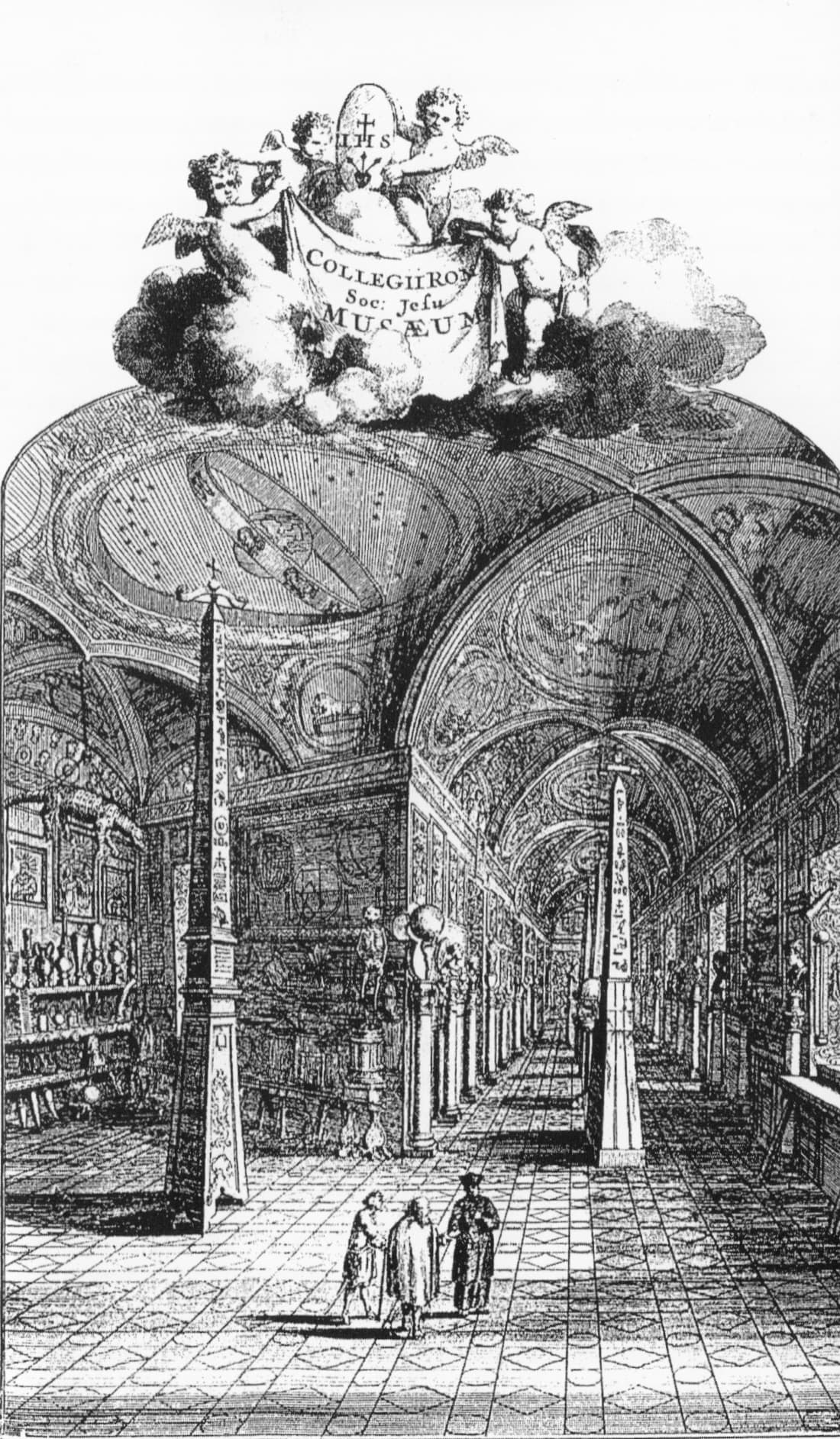
cabinet / kircherianum
The point is not a feed. It is a collection with enough pressure to become an instrument.
artist
expands the possible
mathematician
searches for structure
engineer
forces contact with reality
businessman
gives the result consequence
steward
asks which capabilities deserve amplification
vector
working edge
why it matters
decision
Systems that transform uncertain signals into actions, recommendations, plans, or institutional choices.
From signal to decision under real constraints.
memory
Tools for memory, retrieval, provenance, synthesis, source-grounded discovery, and preserved context.
From archive to action without losing the source.
autonomy
Autonomous and semi-autonomous systems that remain observable, bounded, evaluable, corrigible, and accountable.
Control surfaces that survive contact with reality.
institution
Human-machine systems that help organizations form better beliefs, allocate attention, and learn from outcomes.
Tools that enlarge judgment rather than replace it.
governance
The control surfaces that determine whether powerful systems can be trusted: data, memory, feedback, tests, escalation, observability, permissions, failure detection, and human oversight.
Capability made legible, bounded, and accountable.
Reading, building, testing, and revising remain close to the work itself.
Notes, maps, references, old systems, and fragments stay available until they connect.
Writing, images, and technical artifacts are different ways of learning to see.
The current vocabulary will change. It always does. The underlying questions remain.
How do we know?
How do we decide?
How do we act?
How do we remember what mattered?
How do we build tools that enlarge judgment rather than replace it?
That is the work I keep returning to.